
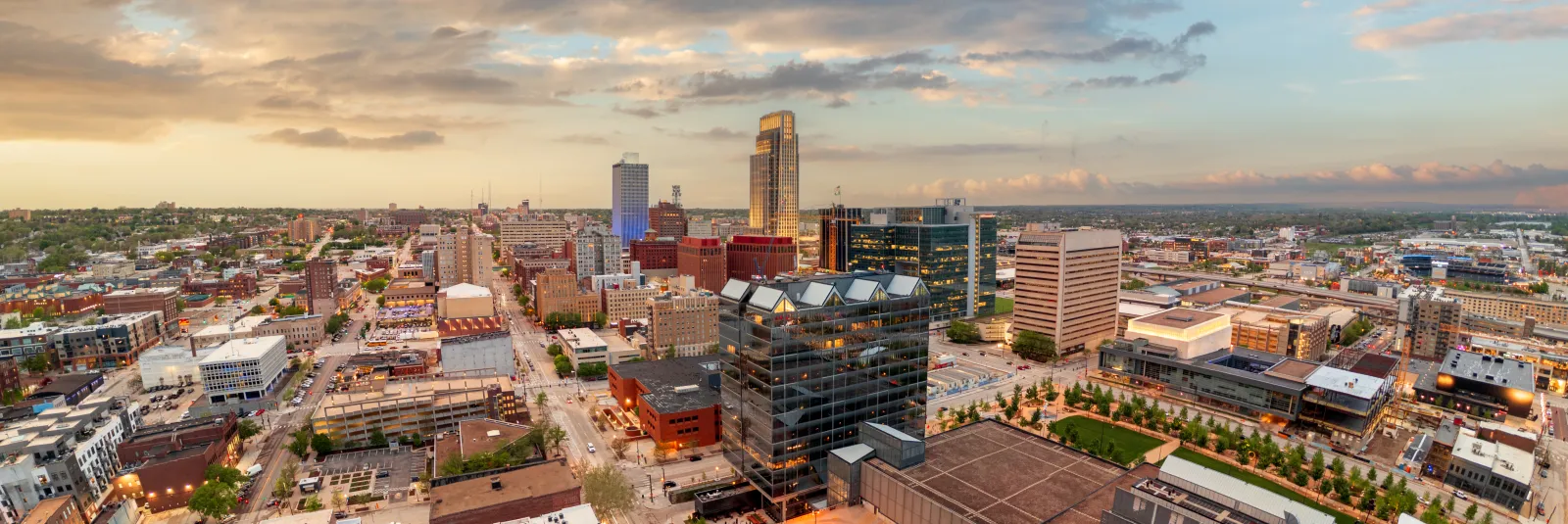
Omaha behaves like two markets. Inside the metro it is dense, short-haul and inexpensive. Outside it, the only question that really matters is whether somebody is already driving your direction.
One market, two states
The Missouri River separates Omaha from Council Bluffs, and almost nobody working here treats that as a boundary. Coverage generally spans both.
Name the Iowa address anyway when you book. It costs nothing to be specific, and a state line plus a river crossing is exactly the combination where a surcharge occasionally hides — a milder version of what the Mississippi does to St. Louis pricing, where the crossings are fixed and the mileage stops matching the map.
Inside the metro is the easy part
The built-up area is compact by Midwest standards and cross-town runs are short. That tends to make the service tier the biggest line on the quote rather than the mileage — the opposite of Kansas City, where the sprawl does the opposite.
Everything else is a corridor
I-80 runs east and west, I-29 north and south, and the useful destinations are genuine distances:
| Destination | Roughly |
|---|---|
| Lincoln | 60 miles |
| Sioux City | 100 miles |
| Des Moines | 130 miles |
| Sioux Falls | 180 miles |
| Kansas City | 200 miles |
This is where asking about scheduled lanes pays more than anywhere else in the region. Several operators run those corridors on a timetable for existing customers, and a piece added to a departure that is already happening costs a fraction of a dedicated vehicle to the same address.
The question is not whether they will drive it. It is whether they already are.
Winter is a real variable
In town, hardly at all. On the corridors, considerably — I-80 across Nebraska closes in serious weather, and an operator who guarantees a tight window on a highway run during a storm warning is quoting rather than committing.
Ask what the severe-weather protocol is and who calls you when a route slips. The answer tells you a lot about how the company is run.
Courier companies serving Omaha lists who covers the metro and what each one carries.